Gorilla Guardians Village
Community and Conservation Context in Musanze, Rwanda
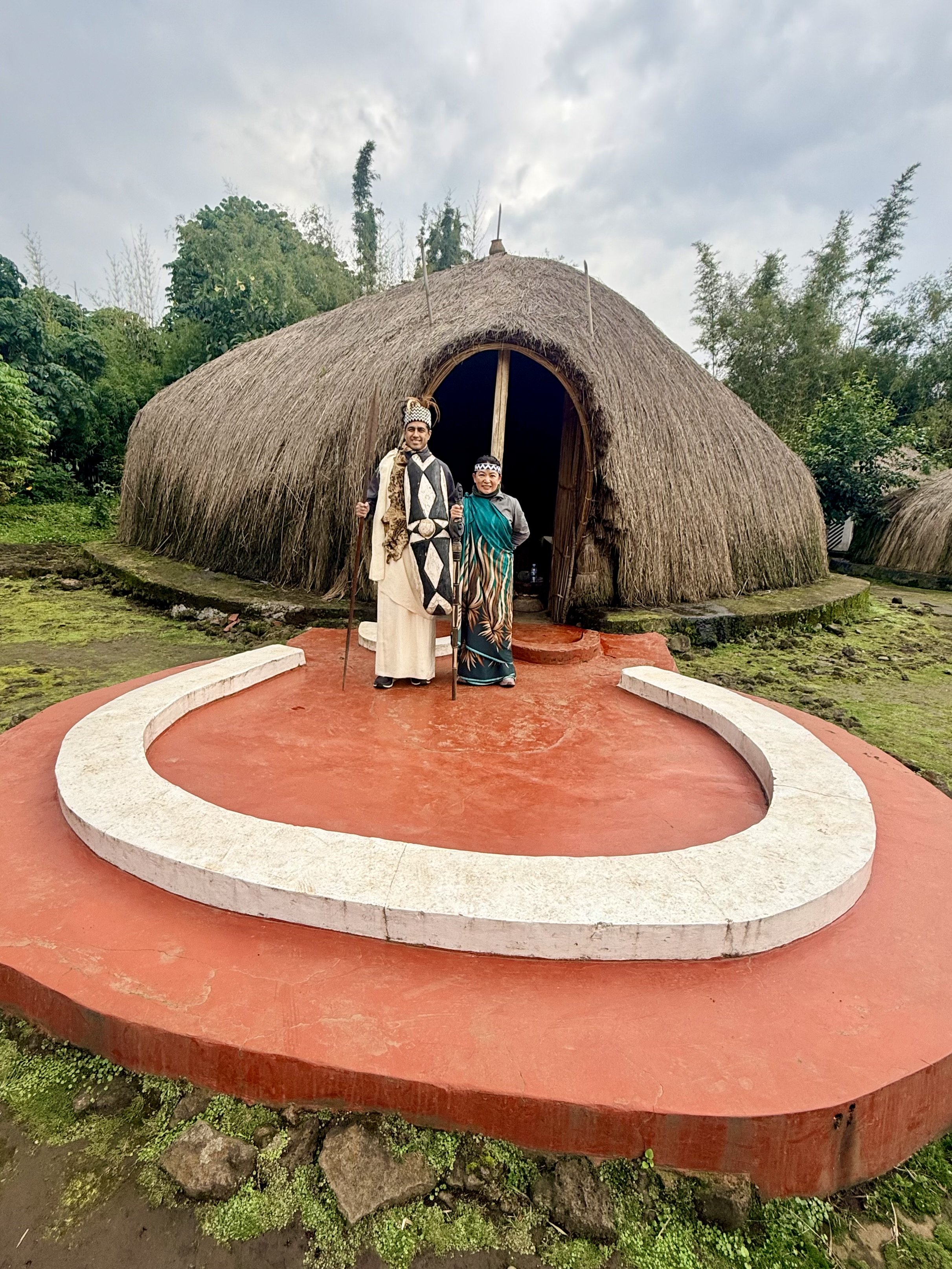
Many itineraries that include Volcanoes National Park also include a visit to Gorilla Guardians Village.
Our tour agency scheduled the visit for the afternoon of our arrival in Musanze. The experience is free to attend and provides cultural context before entering the forest.
I am always cautious when visiting places described as “cultural villages.” As an Indigenous person myself, I pay attention to how traditions are presented and whether context accompanies performance.
Gorilla Guardians Village was founded by Ed Bedoya, a former warden of Volcanoes National Park, as a community-based initiative designed to provide viable economic alternatives to illegal hunting and snaring within protected areas. While mountain gorillas were not typically hunted directly in recent decades, they were vulnerable to snares set for other wildlife. Reducing illegal hunting strengthened protection across species.
The village connects conservation with livelihood.
What to Expect
When we arrived, we were the only visitors present. Whether by design or timing, the visit felt personal and unhurried.
A guide — ours was Sam — leads visitors through a series of huts where traditional knowledge and skills are demonstrated.
Activities may include:
• Beekeeping techniques
• Herbal medicine preparation
• Flour grinding by hand
• Demonstrations of traditional hunting tools
• Butter making and other household practices
Former forest-based subsistence skills are explained within a tourism framework.
Music and dance are also part of the experience. Drumming establishes the rhythm, followed by group singing and traditional dances. Visitors are invited to participate — helping keep time on the drums or joining the dance circle.
There is a “royal house” where guests may try on traditional royal clothing and listen to a musical performance featuring a traditional guitar.
Some visits include a wedding ritual demonstration. In this performance, a bride is carried on a litter by family and community members and delivered to her new home with symbolic gifts. We were told that historically, this procession could take place across hills.
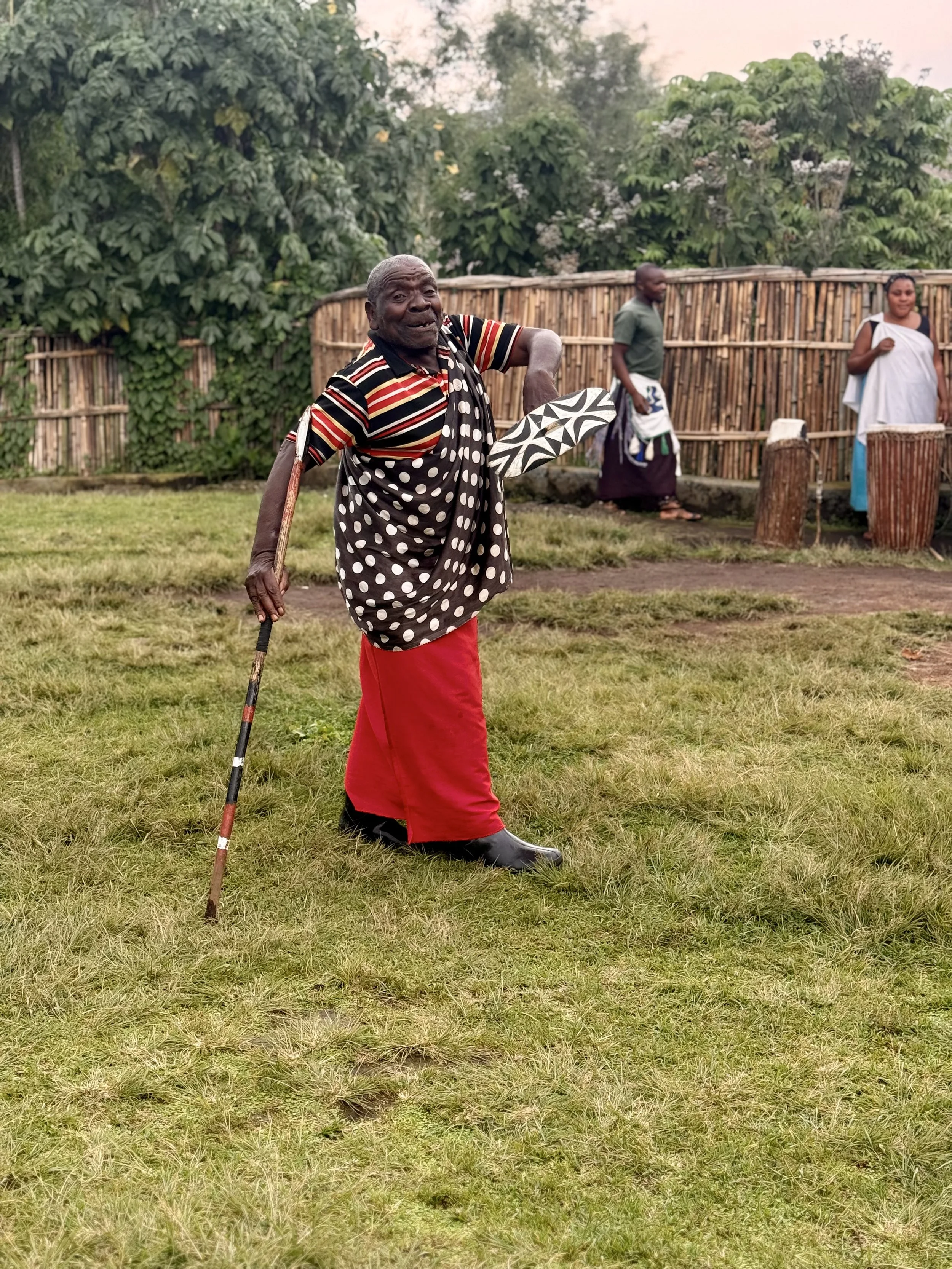
I hesitated before participating. In my own culture in Kalinga, litters are used to carry the sick, not brides. But the invitation was offered with warmth, and I agreed.
Participation is optional and guided. Once I agreed, Sam (our guide) dropped a cloth over my head and told me to cover my head with it. He then asked me for my phone and filmed the entire experience for me.
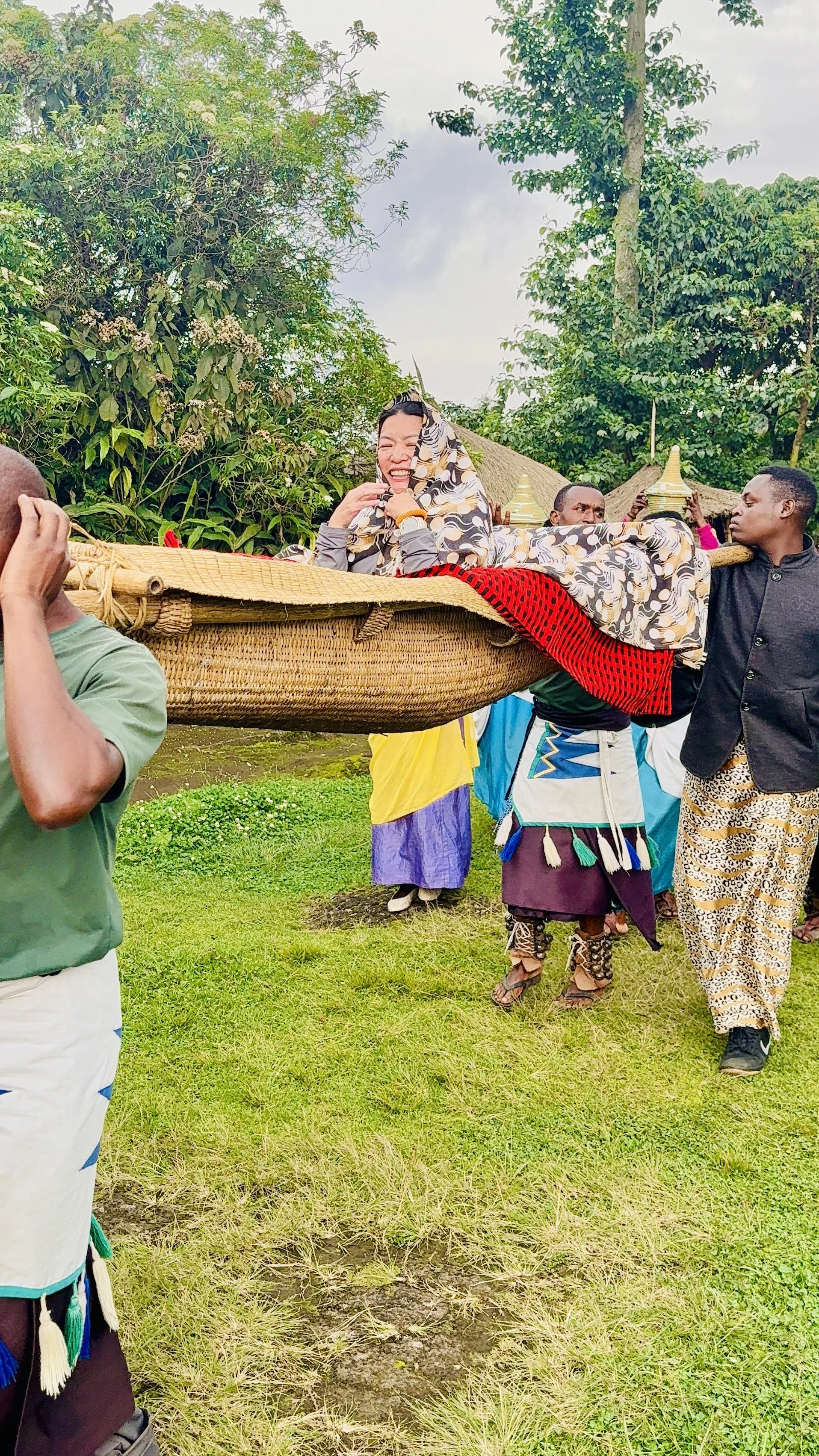
Throughout our visit, one of the older members of the village followed us with high energy and hospitality. He had once hunted in the forest and now shares traditional archery skills with visitors. He coached my husband through the bow and arrow demonstration and declared him fit for marriage, at least by traditional standards.
At the end of the visit, tipping is customary. A banner explains that approximately $40 can fund the purchase of a goat for a participating family — an example of how contributions are translated into tangible support. We chose to leave a tip.
Why It Matters
The value of the visit lies less in entertainment and more in understanding how conservation revenue intersects with livelihood.
I was relieved at the end of the visit.
It did not feel forced. The hospitality felt warm and unhurried. There was no aggressive marketing or pressure — just structured demonstrations and open participation.
I cannot claim to know whether every element fully represents the depth of Rwandan culture. Cultural presentation within tourism always involves selection and framing.
But for me, it did not feel exaggerated or theatrical.
It seemed that what was being shared was offered with intention — not spectacle.
Gorilla trekking does not begin in the forest.
It begins with the communities who live beside it.